Create your own video slideshow at animoto.com.
Sunday, January 31, 2010
The Story of a Collector: Anne Zimmerman
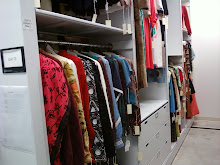
The Story of a Collector: Anne Zimmerman highlights the donated, 25-piece anthology of clothing, dating from the 1940s - 1980s that features the styles and accessories that have become iconic in the fashion industry. The Zimmerman collection is a glimpse of one woman's love for fashion and gathering innovative pieces of clothing. The exhibit is open through April 19 from 11am-4pm on Mondays through Fridays in the Mary Alice Gallery, Morrill Hall, Iowa State University. For a catalog accompanying the exhibit, please contact tcmuseum@iastate.edu


Introduction
 The work of American designers forms a significant portion of the Anne Zimmerman collection, especially the designs of her friend Rudi Gernreich. However, despite the emphasis on American designers, an examination of the objects in the collection suggests a clear collecting vision for pieces that were important and innovative in the overall development of fashion from the 1950s through the 1980s, both in Europe and in the United States. Note, for example the white wool Andre Courreges dress, an iconic design of mid-1960s space-age fashion, and the Claire McCardell shirtwaist dress, a classic of the 1950s ready-to-wear American fashion. Many of the pieces in the collection reflect the work of a group of U.S. designers who, although they produced ready-to-wear, incorporated the type of dressmaker details, such as bound buttonholes, often seen in custom work.
The accessories in the collection, while also representing significant designers, show an awareness of the ability of fashion to have a sense of humor. The small hat by Bes-Ben, with its black cats perched atop the wearer's head, is an example of the style for which the company was known, but also demonstrates the knowledge and humor of the collector. A cashmere sweater, covered with appliqued bees and sequins, by one of the major American manufactures of decorative sweaters, is another example of playfulness and a "lets not take this too seriously" approach to fashion.
The Practice of Collecting
Individuals have been collecting for centuries. Today, collections of dolls, plush toys, figurines, baseball cards, and die-cast sculptures can be founds in almost half of all U.S. households. Clothing and textiles have also been collected and exhibited by a variety of individuals and institutions, including museums of art, design, history, and ethnography (Steele, 2008). According to Russell Belk (2001), the spectacular growth of mass production, mass distribution, and mass communication parallels the similarly dramatic growth of mass consumption, mass individual collecting, and musem collecting (p. 1). Belk continues that individual collecting is, "the process of actively, selectively, and passionately acquiring and possessing objects and experiences" (p. 67).
Objects undergo a metamorphosis when they are collected. Everyday things are transformed-they are managed and valued in ways that are much different from those of the objects' past intended use. In textile and clothing museums, fashion that was once worn and then discarded due to changing tatstes, finds a permanent home where it is suited, cared for, and exhibited in evironmentally-controlled storage and gallery spaces. These garments present opportunities to examine and interpret social, economic, technological, and political components of history. There are many reasons why people collect including, but not limited to, enjoyment of acquiring and admiring their collections, to show individualism and accomplishment, to bond as a community of collectors, and in an effort to remember and to relive the past.
References:
Belk, R.W. (1995). Collecting in a consumer society. London and New York: Routledge.
Steele, V. (2008). Museum quality: The rise of the fashion exhibition. Fashion Theory, 12(1), 7-30.
Gilbert Adrian (1903-1959)
 Adrian was a costume designer and fashion designer who dressed the "Golden Age" of Hollywood stars. He began designing costume for Metro-Goldwyn-Mayer (MGM) studio in 1925, and created costumes to develop the individual personas of film actresses including Greta Garbo, Joan Crawford, Norma Shearer, Jean Harlow, Katherine Hepburn, and Judy Garland. In 1942, Adrian opened a design studio and showroom in Beverly Hills under the label Adrian Ltd. He stated in 1950, "Clothes should be functional, with a flattering grace that makes them un-dated and timeless in their charm."
Black dinner dress with decorative black and white bands. Rayon crepe. Mid-1940s.
Norman Norell (1900-1972)
 "America's Dean of Fashion" - Norell attended the Parsons School of Design in New York and the Pratt Institute in Brooklyn. His simple but stylish clothing was lauded for its glamour, timelessness, and high-quality construction. Considered the first American fashion designer to compete successfully with French coutriers, Norell's obituary appeared on the frobt page of The New York Times with the headline: "Made 7th Ave. the Rival of Paris." The designers talent was recognized in 1943 when he received the first Coty American Fashion Critics Award ever presented.
Red three-piece suit. Wool boucle, wool jersey blouse. 1960's. Label: Traina - Norell.
Claire McCardell (1905-1958)
 Called the "mother of sportswear," Claire McCardell was a pioneer of the "American look." She studied at the Parsons School of Design in New York, designed for Hattie Carnegie and then for Townley Frocks. From the 1930s to the 1950s, McCardell revolutionized women's wear by designing clothing that was simple, functional, and stylish, all within the constraints of mass-production. She took simple fabrics-cotton, denim, mattress ticking, gingham, and jersey - and created clean shapes using detail as a fashion focus. McCardell effortlessly paired "separates" -skirts, pants, and sweaters - that acted as interchangeable mates, in part to make women's lives easier. In 1955, Time Magazine wrote, "She has an artist's sense of color and a sculptor's feeling for form."
Striped shirt-dress. Cotton lawn, silk organza lining. Early 1950s.
Rudi Gernreich (1922-1985)
 Born in Vienna, Austria, Gernreich fled to America in 1938. He attended the Los Angeles City College from 1938 to 1941 and then worked as a dancer and costume designer. In 1948, he became a freelance fashion designer. In the 1950's, Gernreich designed swimwear for the Westwood Knitting Mills. He opened his own company, which became Rudi Gernreich Inc., in 1964. In the 1960's, Gernreich designed sportswear for a predominately youthful market. His most famous contributions included the "topless bathing suit"in 1964, and the "no-bra bra" made of molded nylon cups attached to shoulder straps and a narrow elastic band encircling the rib cage.
Brown and black mini-dress. Wool double knit. Mid-1960's.
Tina Leser (1910-1986)
 Tina Leser was one of a group of designers before and during World War II that created a recognizable American sportswear look. In 1935, she opened a small dress store in Honolulu, Hawaii, where she sold both traditional textiles as well as her own designs. She started her New York business in 1941, specializing in sportswear inspired by other cultures. According to historian Madelyn Shaw, Leser created "something uniquely American from a melting pot of sources."
Printed jumpsuit with appliques at the shoulder. Cotton, rayon blend. Cotten sateen lining, 1950's.
Tuesday, November 17, 2009
Patchwork History: Quilts
State Historical Society of Iowa
9am-4:30pm
Today through Saturday Novemebr 21, 2009.
State Historical Building
600 East Locust Street
515-281-5111
9am-4:30pm
Today through Saturday Novemebr 21, 2009.
State Historical Building
600 East Locust Street
515-281-5111
Monday, November 16, 2009
Des Moines Botanical Center Presents...Quilting Through the Seasons and Nature Prints
October 26, 2009 - November 15, 2009, 10:00am-5:00pm Quilting Through the Seasons & Nature Prints
Stop down and enjoy the beautiful quilts on display in conjunction with the AQS Expo! 'Quilting Through the Seasons', featuring quilts and large color photographs of gardens by American Patchwork & Quilting magazine, will be on display in the North Wing Gallery and 'Nature Prints' by quilter and Botanical Center volunteer Betty Mathers will be featured in the Show House Corridor."
Stop down and enjoy the beautiful quilts on display in conjunction with the AQS Expo! 'Quilting Through the Seasons', featuring quilts and large color photographs of gardens by American Patchwork & Quilting magazine, will be on display in the North Wing Gallery and 'Nature Prints' by quilter and Botanical Center volunteer Betty Mathers will be featured in the Show House Corridor."
Saturday, October 24, 2009
Quilt Walk in Valley Junction Oct 28-Oct 31st
A great way to end the week or celebrate Halloween in the Historic Valley Junction area in West Des Moines next week.
Here are some highlights of the event!
THURSDAY, OCTOBER 29, 2009 4–8 PM
Open houses, exhibitions, gallery openings with artists,
and demonstrations
QUILT WALK and special exhibitions run from
Wednesday, October 28 through Saturday, October 31, 10 am – 5 pm
Some exhibitors that will be featured are: The Quilt Block, Artistic Bead, 2AU, Fair World Gallery, Sisters, The Quilt Junction, and The Kavanaugh Art Gallery.
Event Flyer:
http://www.valleyjunction.com/documents/filelibrary/events/postcard2009_7F3E3F726E321.pdf
Website:
http://www.valleyjunction.com/
Sunday, October 4, 2009
Wednesday, September 16, 2009
Introduction
When one thinks of cultural diversity, the state of Iowa may not quickly come to mind. Yet, Iowa has a rich history of welcoming cultural diversity from Norwegian settlers in the northeastern part of the state in the nineteenth and early twentieth centuries to the more recent reception of Sudanese from Africa and Tai Dam immigrants from Southeast Asia. With funding from Humanities Iowa and the Iowa State University Center for Excellence in the Arts and Humanities, the curators organized historians and artists from across the state to research, document, interpret, select and/or create historical and contemporary Iowa cultural traditions in fiber and fabric arts. The historians documented the fiber/fabric arts traditions of: African-American quilting; Amish quilting; Bosnian kilim rug weaving; Latin American guayaberas or wedding shirts, Native American Meskwaki regalia; Norwegian hardanger embroidery, Sudanese textiles, and Tai Dam and Laotian weaving. The historians then approached fiber/fabric artists to create new pieces, or identified existing pieces to purchase. The garments and textiles selected for this exhibit reflect these cultural textile traditions in Iowa.
The Settlers of Iowa
Iowa became a part of the Union on December 28, 1846. Known as the “Food Capital of the World,” Iowa has been the home to many immigrant and native groups. Several of the ethnic groups that came to Iowa included: African American, Amish, Bosnian, British, Czech, Danish, German, Hasidic Jews, Hmong, Irish, Meskwaki, Mexican, Norwegian, Scottish, Swedish, Welch. Settlers of Iowa had to survive and thrive, navigating a new land, often learning a new language and customs, and beginning with virtually no possessions or resources.
African American Settlers
African Americans hold a significant place in the history of America. In each of the fifty states, African Americans have been an integral part of history. Iowa became a state in 1846 and the first decennial census was conducted in 1850. The census tallied 333 African American residents. After the Civil War, oppression, danger, and Jim Crow laws sent many African Americans on a search for new opportunities and a better, safer life.
Some of the earliest African Americans to move to Iowa came to work as steamboat laborers, coal miners, packinghouse workers, and railroad workers. Steam boats located on the Mississippi and Missouri Rivers provided jobs as wait staff, loaders, and deck hands. African Americans also settled in areas where Iowa’s largest industry, coal mining, provided stability and income for their families. The majority of African Americans who migrated to Iowa came from the South and they brought with them many of the traditions and cultural artifacts of their families and ancestors.
African American Quilting
The majority of African Americans who migrated to Iowa were from the Southern region of the United States, affording them traditions and cultural artifacts from their southern families and ancestors.
Quilting was often a social activity for African American women and sometimes men. After working all day long, African American women would take time out of their day to enjoy the art of quilt making. Research suggests that the creativity African American women used in their quilts stemmed from an improvisational response to the chaos in their lives. The experiences that African American women faced in the fields, on plantations, and moving to a completely new place were difficult, but they still took the time to be artists. The life experiences that African American women faced provided the context for their creativity in quilting and are responsible for the differences seen in African American quilting than in quilts from other cultures.
Quilting provided an outlet for survival by creating community and kinship among African American women. Women would sit and sew with friends, as a social activity and often to help others in need. Making quilts was a free space for African American women to be creative and make their own decisions. They were able to determine how to place the pieces in the quilts and shared life experiences with other women.
The African American women were able to showcase their skills by strategically using old scraps of clothing and turning them into works of art. Quilts were often made from old coats, dresses, or pants, and even from potato or fertilizer sacks. The quilts made by African Americans have characteristics that differ from their Caucasian counterparts. They are described as chaotic, unplanned, using long stitches, unusual color combinations, and patterns that lack organization. Descriptions of the construction include strips or strings instead of patches and squares, medium sized stitches, asymmetrical designs, bold, contrasting colors, and knots, tacks, or ties to quilt layers together. These design elements ultimately showed the unique elements of African American quilts.
Amish Settlers
The Amish settled in the area that would become Kalona, Iowa in 1846, before the town was officially formed or named. For the Amish, community is of central importance as are strong group and family relationships. Amish are traditionally known for their plain dress, their use of horse and buggy and their focus on the natural world, including alternative farming practices. To the “English,” or outside observer, the Amish seem to be a homogeneous society, but there do exist importance differences between church districts and groups. The Amish people who settled in Johnson County migrated to Iowa from established communities in Ohio, and were, in part, searching for added land for their typically large families. Families were often motivated to move because of differences in religious beliefs or church policy. The biggest challenge for many migrating Amish was finding a balance in whether a community was strict enough or too liberal. One subject that was often a source of unhappiness or disagreement was the use of color in dress and in decoration for the home.
Amish Quilting
As Amish families traveled to their new homes they brought textiles and items to use for comfort and warmth while remaining obedient to the rules of their faith. History asserts that the Amish did not bring the tradition of quilting with them from Europe. Instead, they learned the craft of quilting watching their “English” neighbors, still observing the rules of the “Ordnung,” the set of religious doctrines of the Amish. Followers are admonished to shun brightly colored clothing and designs as well as decorative objects. Quilts are made in many patterns, such as stars, diagonal stars, and wedding rings. Patterns are handed down from generation to generation and are usually made with plain materials or from pieces of old clothing.
The first step of piecing an Amish quilt together is selecting an overall quilt pattern that often follows family tradition. A major preference is a diamond or a variable star. Cutting and piecing a quilt is a home activity where generations of Amish women (grandmothers, mothers, and daughters) come together to help in the process. Sometimes the piecing is done by hand or a foot-powered treadle machine is used.
Some Amish women piece their bars or wide borders with strips of different sizes to extend the usefulness of a remnant. This economical use of material, often on the bias, creates some appealing monochromatic effects. When the quilt top has been pieced, the filling is added for warmth and sturdiness. In the past, Amish women chose a coarse, uncombed wool filling; however, today the women prefer synthetic fillings manufactured specifically for quilts because they are warmer than wool and wash and dry more easily. The tiny quilting stitches hold the filling securely so that it does not slide around or accumulate in one part of the quilt. The backing material of a quilt is frequently pieced with strips of various sizes. The backing may appear more worn out and faded than the front because it is often composed of parts of old clothing or quilts. When the top and the backing are secured, the quilt is set into a quilting frame, that allows the quilt to be turned while it is stitched. Templates are used to mark the quilt with the motifs that are going to be stitched. Amish women use pencil, chalk, or the point of a pin to trace around these patterns once the patterns are drawn, the women begin filling in the design with tiny running stitches, creating a unique design.
Bosnian Immigrants
Bosnia-Herzegovina, commonly called Bosnia, is located in southeastern Europe on the Balkan Peninsula along the coastline of the Adriatic Sea. Because of war conflicts, many Bosnians were forced to leave their country and find new homes in the United States. Classified as refugees, Bosnians started immigrating in large numbers in the mid 1990s while their country was in turmoil. Bosnian immigrants settled in the United States because of ethnic conflict, as opposed to economic reasons.
By 1997, Bosnian immigrants were the largest population of refugees in the state of Iowa as reported by Refugee Services. By 2001, more than 10,000 Bosnians were located in Iowa with the largest populations in Des Moines (6,000-7,000); Waterloo (2,000-3,000) and smaller populations in Iowa City and Davenport. Cities such as Des Moines and Waterloo boast Bosnian food stores, restaurants, and coffee shops. The Bosnian Association of Des Moines was created in 1995 by Bosnians in the area.
Bosnian Kilim & Crochet
In Bosnia, textiles are a major industry; textile traditions include crochet, knitting, and flat woven rugs called kilims. Girls learn to crochet lace and doilies from their grandmothers, mothers, and aunts. Crochet lace pieces and doilies are very time consuming and are usually given as gifts to close friends and family as opposed to being sold for profit.
Kilims are well-known, unique, and intriguing flat woven rugs from Bosnia. They are a symbol of Bosnian culture, though it is becoming a lost art. During the country’s conflict in the 1990s, few refugees were able to take the kilim rugs from their homes. Recently however, Americans traveling to Bosnia have been able to purchase these rugs for their homes.
Traditionally, in the home, kilim rugs were used to cover doors and food, as prayer rugs, and on rooftops in the summer to provide shade. They also provided an aesthetically appealing design. Kilims were given to guests, used as a dowry for a young bride, and even provided wealth to families, because they could be traded as currency. Kilim weaving was predominately a woman’s profession and a part of her daily chores.
Enthusiastic Westerners have taken to collecting the bright and colorful rugs for wall hangings, curtains, cushion covers, upholstery, wallets, shoes, suitcases, handbags, hats, belts, and covers for tennis rackets and books.
Meswaki Settlers
The history of the Meskwaki correlates with the history of other tribes from the Great Lakes region, which is evident in the similarity of cultural practices, language, systems of organization, and dress. The name Meskwaki means “People of the Red Earth.” By the early-18th century, the Meskwaki were at war with the French as a result of conflicts over policy and trade. In 1728, France adopted a policy of genocide with the intent of exterminating the entire tribe but in 1735, after a long series of skirmishes, the surviving Meskwaki sought refuge with their allies, the Sauk, in Green Bay, Wisconsin. Shortly thereafter, both groups moved to Iowa. They settled west of the Mississippi river valley in present day Davenport, Iowa. In 1845, the Meskwaki were forcibly removed to a Kansas reservation to make room for white settlers. Unhappy with the conditions of life in Kansas, a group of Meskwaki came back to Iowa and with their own money purchased their first eighty acres of land in 1857. The Meskwaki still live on this land today, which has expanded to seven thousand acres through a series of land purchases.
Meswaki Ribbonwork
Ribbonwork is a textile art form and a method of applied decoration developed by Native American women of the Great Lakes region after the introduction of European trade in the early 17th century. The Meskwaki tradition of ribbonwork is a reflection of the past in how it symbolically carries on the meanings of the culture, while the actual form in material goods has changed over time.
To create ribbonwork, pairs of ribbon strips or cut fabric strips in contrasting colors are layered and then the top layer is cut, folded under, and stitched to the bottom layer into a repeating design configuration. The contrast of color forms the design and takes on a positive/negative image of an abstract representation of floral design. Two or more of these strips are sewn together to form a mirror-image of the repeating design which becomes a panel. The panels are then used to embellish garments. Several types of ribbonwork-decorated garments for men and women exist, such as shawls, breechcloths, leggings, moccasins, and bags; the primary garment for women is the ribbonwork skirt. Today, Meskwaki wear western-style dress for daily attire, but for weekly ceremonies and periodic dance festivals, they wear Meskwaki ethnic dress decorated with ribbonwork.
Scholars have indicated that it may have been possible that the appliqué method of beadwork was created by the Meskwaki. Beadwork patterns used abstract floral designs which were documented around 1865. Ribbonwork also used curvilinear motifs in abstract floral designs reminiscent of the floral beadwork designs. The use of this artistic style in appliquéd beadwork became the accepted mode of applied decoration for the Meskwaki and also resulted in the transfer of this artistic style to ribbonwork. Representative Meskwaki motifs are typically of simple designs, with curves resembling stylized flora; these characteristics set them apart from other tribes. Motif pattern sources came from reworked existing patterns or from ribbonwork samples, both of which were handed down from previous generations. Motif patterns could also be created from scratch. Any of these motif patterns can be manipulated into many configurations to create new patterns.
Mexican Immigrants
In 1910 there were only 590 Mexican Americans in Iowa, but by 1920 that number had risen to about 2,500. Some of these Spanish-speaking settlers worked in agriculture, while others found jobs in larger Iowa cities such as West Des Moines, Mason City, Davenport, and Council Bluffs. Between 1990 and 2000, many more Latino/a (people from Mexico and other Latin American countries) continued to arrive in Iowa. The number of Mexicans living in Iowa has risen sharply; by 2000, the total number had reached 82,473. Many arrive in Iowa with other relatives, friends, or people from the same villages in Mexico.
Mexican Guayabera (Wedding Shirt)
The guayabera shirt is rooted in Latin America. Guayaberas are popular because they are lightweight, cool, and comfortable. The style of guayabera is as follows: pleats down the front, four pockets in the front, a flat collar and small buttons.
This loose fitting shirt is worn untucked and has been considered a traditional garment because it is always in style. Since the guayabera fits people of all shapes and sizes and due to its ability to camouflage an expanding waistline, it can be worn by anyone; but traditionally has been considered a man’s shirt.
The original guayabera was made of linen, so traditional style guayaberas are typically made of linen or cotton. Although in recent decades they are also made of silk or polyester. Other style modifications to the original guayabera are two pockets instead of four, which is called a Mexican chazarilla, or the addition of embroidery designs. The guayabera has been adapted to modern styles of the era.
The guayabera has developed many uses since its origins. It can be utilized as casual or formal wear. The guayabera has been recognized as the “Mexican wedding shirt” because it is acceptable and common for guests, groomsmen, and even the groom to wear. Most Cuban men own at least one guayabera for formal occasions. Throughout history the guayabera has functioned as a form of identification for landowners, laborers, freedom fighters, mestizo officials, travelers, and nationalistic Cuban, Dominican, Colombian, Puerto Rican, Venezuelan, or United States Latino/as.
One of the main reasons guayaberas are popular is because they keep a person fresh and comfortable during warm seasons. For this reason retailers mainly carry guayaberas during spring and summer months. In addition, during the spring and summer months Latinos have numerous celebrations and parties such as baptisms, quinceañeras, and weddings where a guayabera is acceptable formal attire. Other occasions in Iowa where it is common to wear a guayabera include churches, socializing, and Spanish music dances and concerts in Des Moines. For boys it is common to wear guayabera to Latino festivals, church, school events, or celebrations such as weddings, where their garments match their fathers and grandfathers.
Norwegian Immigrants
Norwegians settled in many areas of the United States. However, for generations, Norwegian immigrants and their descendents have called Iowa home. Organized Norwegian immigration began in 1825 when the The Restauration left for the United States with 52 passengers. These passengers, mostly Quakers, were seeking religious freedom, however, the vast majority of Norwegians emigrated for economic reasons. Only three percent of the land in Norway is arable, and in the early nineteenth century 83 percent of the quickly growing population depended on farming, logging, and fishing.
Between 1825 and 1980, nearly one million Norwegians left for America. The peak years of Norwegian immigration were between 1866-1929. by the turn of the twentieth century, most Norwegian Americans lived in the Midwestern states of Illinois, Iowa, Minnesota, North Dakota, South Dakota, and Wisconsin. Immigrants were enticed to the Midwest by good farmland, established settlements of Norwegians, and persuasive “America letters,” written by recent immigrants to friends and relatives in Norway.
Norwegian Hardanger
For generations, Norwegian immigrants and their descendents have called Iowa home. These immigrants brought with them many traditions, including a specific embroidery technique called Hardanger, which holds cultural meaning and provides an artistic challenge to all embroiderers. Although the roots of this style of embroidery can be traced to Europe, in Iowa and other states settled by Norwegian immigrants, the embroidery transformed with color and the addition of other hand and needlework techniques. It followed international artistic tastes and became popular with Americans of many ethnic groups. Today, Hardanger appeals to many needle-workers because it is challenging, historically and culturally grounded, and can showcase an individual’s ethnic identity.
Today, many writers and needleworkers refer to the embroidery technique simply as “hardanger,” but it is more correct to call it Hardanger embroidery (in English) or hardangersøm (in Norwegian) to avoid confusion. Hardangersøm is a Norwegian counted thread embroidery with cut and drawn work. Historically this embroidery was best known in the county of Hordaland on the West coast of Norway, where it was simply called white work, hvitsøm, and was identified by its specific stitches and techniques, such as utskurdsøm (cut work) and primhol (eyelets). In later years, the technique was referred to by the name Hardanger, a name shared with the large fjord and cultural district in Hordaland County. Hardanger embroidery probably came to Norway from the east, first from ancient Persia and then from Italy. It closely resembles Italian reticella or reticello. The style continued its western migration during the mid-nineteenth and into the twentieth centuries as it came to the United States and Canada with immigration and the expansion of international business.
Sudanese Immigrants
Between the vast Sahara Desert and Costal Nubian Desert lies the Republic of Sudan, a diverse country full of dynamic cultural groups and religious beliefs. This region of Africa has had a tumultuous existence, beginning with British colonialism that lasted until 1956, civil wars, floods, and the more recent genocide in Darfur. Today, millions of citizens are displaced, not only within the country but also around the world. Hundreds of thousands of Sudanese have migrated into the United States. In order to maintain a connection to their Sudanese heritage and a feeling of community, many families have traveled together, clustering in new cities and states. Using dress as a medium, many Sudanese immigrants continue to express their heritage outside their country’s borders through continuation of traditional textiles and dress. The connection to traditional textiles helps keep the culture alive and vibrant, much like the colors contained in their textile work.
Sudanese Textiles
Using textile production as the common thread, researchers have followed the connections between community and dress across the regions of Sudan. From the historic processes of crafting kanga to the religious thawbs of northern Arab women, this country’s textile spectrum explodes in motifs and meanings. The diverse populations still share textiles and dress as a common link, as well as a medium through which Sudanese people can express their beliefs, practice their traditions, and communicate with the world at large. From the Kanga cloth of the Swahili group to the Islamic tobes, these colorful textiles reflect the diversity of the Sudan. As the political unrest of the nation continues to shift, the Diaspora of Sudanese people increases. Emigrants of the Sudan find themselves in far away places, yet still practice and preserve their heritage in new countries and cities, in Europe and also in the United States.
One specific textile piece that expresses the connection between cultural beliefs and dress, as well as the diversity of fabric production in northeast Africa, is the kanga cloth. From the northern sectors of the Red Sea to the southern tip of Africa, the Swahili Diaspora influenced the transmigration of this versatile textile. Primary documents show written records of the kanga at least a century ago, yet oral histories solidifies its importance much earlier.
In 1907, Ethel Younghusband wrote one of the first modern observations of the textile: “The women in East Africa simply wear two cloths or ‘kangas’; one tied under both arms, the other thrown over their necks and arms. But in Zanzibar they copy the Arab dress more closely, and often have one kanga made into a little tight dress to their knees, the other flung artistically over their shoulders.”
The modern definition of kanga, translated from Omani Arabic as “piece of cloth,” is two cloths with borders joined together as one piece. There are three key elements to each kanga cloth: the first name (or jina) which is the generic name assigned given the geometric design on the cloth, the four borders with the same design, and traditionally each cloth has a large center motif.
Subscribe to:
Posts (Atom)